Theatrical Props Tampa, Florida: Types, Costs & Buying Guide 2026

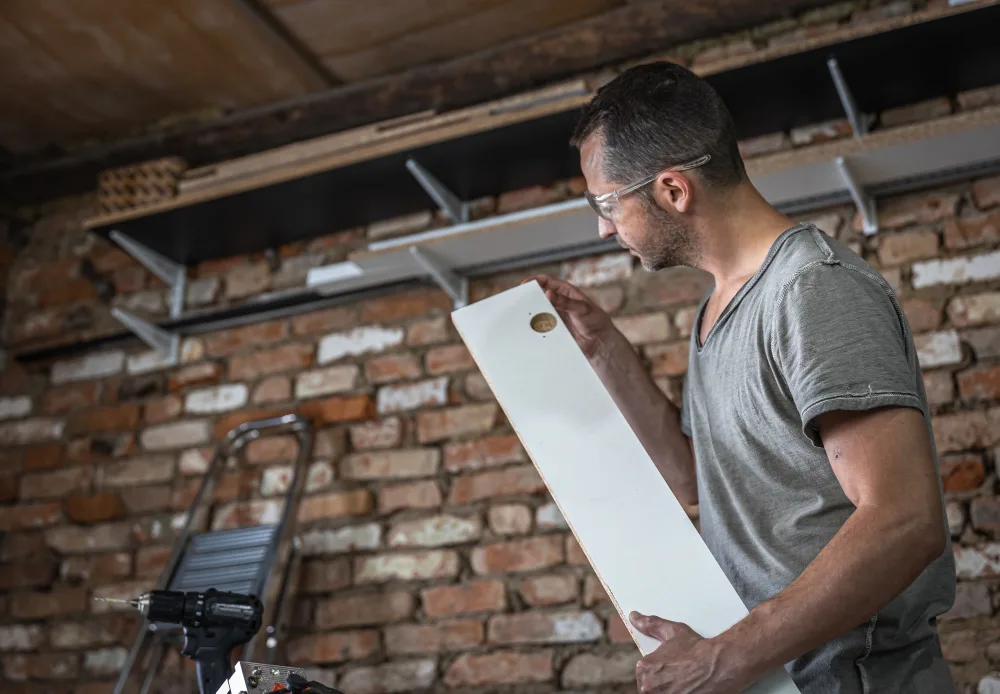
When looking for theatrical props in Tampa, foam is typically the best place to begin. A foam prop can be purchased at a much lower cost than wood or metal and is much lighter and can be carved into practically any shape imaginable, making it ideal for school plays, touring shows, film sets, and even theme park pieces. The final price will vary according to the size, detail, coating and timeline; this guide will help you determine your costs before you call.

We are IPS Foam in Clearwater and have created stage props, movie props and set pieces for productions of any size. We’ve worked as a studio for HBO, Amazon Prime, independent studios, television shows, musicians and theme parks, and for school theatres too. Let’s say you’re thinking about building; here are some things we say.

What is considered to be a theatrical prop?

The term “word” is loosely applied. In reality, there are three groups:

Hand props are small items which actors carry, such as a goblet, a sword, a briefcase, etc. They have to be light and easy to lift.

The larger items that make up a scene – columns, rocks, trees, arches, thrones, signs and backdrops- these are set pieces. Foam comes into its own here, as one person can lift a six-foot column of foam, whereas one person cannot lift a six-foot column of solid wood for the same amount of money. 

Décor and special pieces include oversized letters, sculptures, parade floats, concert and event props, and trade show displays. See our 3D letters, signs and sculptures and monuments for examples.

Why do so many prop makers use foam?

Expanded polystyrene (EPS) is the material behind most of our work, and it’s popular for good reasons.

It’s inexpensive compared with wood or metal, so budgets stretch further. It’s light enough to move around the stage quickly and to pack up for a tour. It carves easily with hand tools or hot wire cutting, and for complicated shapes, a CNC router can do the work from a digital file.

It also takes paint and coatings well. Once a prop is coated and sealed, it stands up to repeated handling, which matters for a show that runs for weeks.

What drives the cost

Foam prices depend on the job, not a fixed list. The main factors:

Size. More volume means more material and longer cutting time.

Complexity. A simple cut shape is the cheapest. A hand-carved, detailed sculpture takes a lot more labour, and that’s where most of the cost sits.

Finish. A raw prop costs the least. Adding a hardcoat, paint, texture and special effects moves the price up.

Quantity. If you need several of the same prop, we can mould or programme the shape once, which brings the cost per piece down.

Timeline. Rush orders can cost more, and schedules are tighter during busy seasons.

Delivery and install. Large pieces may need special transport and setup.

We don’t publish flat prices because every project differs, but a sketch, photo or drawing with dimensions usually gets you a quote quickly. Prices also change from year to year, so a quote for your 2026 project is more reliable than any number on a web page.

Foam, wood or rental?

Each has its place.

Wood and metal are sturdy and realistic but heavy, slow to assemble and expensive for the larger sizes. Renting works for a basic object that you have to use just one time – for example, a plain chair or table and not a particular design of rental stock. Fibreglass or resin can provide a hard, shiny surface but is heavier and more expensive.

Foam is in the middle. It’s the best choice when you want a custom shape, a large size and a modest budget. A blend is a good set-up for many productions: purchased or rented standard furniture and made foam of what everyone else didn’t get.

A word on safety

A little maintenance is required for foam props. Please be aware that EPS is combustible, so please consult your venue’s fire codes before the load-in. There are materials or coatings that are required for many theatres, schools and event spaces,, and the final word goes to the fire marshal. If you know where the prop will be used, we can talk about coating options that will work.

Foam cutting may produce fumes, so ventilate any area where the foam is being cut with a hot wire. When actors are standing on props or leaning on them, ask the props what the weight limit is, but do not assume that foam props can support all the actors’ weight.

Overcast skies and warm temperatures indicate that plans are in the works for Tampa Bay.

There are a couple of additional factors to consider in Florida. Humidity and sun exposure can impact props left outside the home or in storage; a good coating is important. When you’re planning events in the Tampa area, such as outdoor shows, festivals and parades, be sure to let people know ahead of time if your event will be held outdoors and be ready to offer a bit of coverage to the elements. A large block of land to a venue is a matter of planning – particularly for driving it through the Howard Frankland or the downtown system. 

Being close helps. We’re in Clearwater, and we deliver across Tampa Bay and much of Florida, which makes it easier to visit, check a fit and make adjustments.

How to order and what to send

Start early. Complex builds can take a few weeks, and the weeks before a big show fill up fast. When you reach out, send:

  • A sketch, photo, drawing or reference image
  • Dimensions, or the space where the prop will sit
  • Where it will be used (indoor, outdoor, touring) and any venue rules
  • How many pieces do you need
  • Your deadline and your budget range, if you have one

If you don’t have a drawing, describe what you want, and we can help with design, including CAD design, 3D scanning and foam sculpturing. You can also see more on our stage and theatrical props page and our party props.

To get a quote on your props, call IPS Foam at 727-447-0085 (we answer seven days a week), or send details through the contact page. We’re at 1611 N Hercules Ave, Clearwater, FL 33765, open Monday to Friday, 8 am to 5 pm, with weekends and after hours by appointment.
Foam Supplier Florida: Compare EPS, Polyurethane & PE Foam Costs

If you’re comparing foam prices in Florida, here’s the quick version. EPS (the white, bead-based foam) is usually the lowest cost per cubic foot, polyethylene (PE) costs more but protects products better, and polyurethane (PU) covers everything that needs to be soft. What you actually pay depends on the size, density, cutting and quantity of your order.

We’re IPS Foam in Clearwater, and we’ve worked with all three since 1982. Here’s what we tell customers when they ask which one to buy.

EPS foam: lowest cost for rigid jobs

EPS is the foam in coolers, shipping boxes, insulation boards, dock floats and most architectural shapes. Block-molded EPS commonly comes in densities from about 1 to 2 pounds per cubic foot, and it’s light enough that a large piece still ships easily.

Our EPS blocks, sheets and shapes are cut by hot wire or CNC router, which keeps custom shapes affordable. We also make molded EPS, insulated cooler boxes and dock floats.

The limit with EPS is that it’s rigid. It does well against crushing, but a piece that takes repeated knocks can crumble, so for products that get tossed around, look at PE instead.

Polyurethane foam: for anything that needs to be soft

PU foam is the soft, springy foam in seat cushions, pillows and upholstery. It comes in a wide range of firmness levels, and it cuts easily for inserts and padding. We carry it for furniture, marine seating, acoustic panels and packaging inserts.

Cost swings the most with PU, because a basic cushioning grade and a high-density or speciality grade are very different products. One thing to know for Florida: open-cell foam like PU has interconnected cells that absorb water, so it’s best kept dry. For damp or outdoor spots, ask us about water-resistant options.

PE and XLPE foam: protection and durability

Polyethylene foam is the tough, closed-cell material you find lining tool cases and protecting electronics, glass and finished furniture. Our own case-insert guidance notes that PE foam lasts longer than polyurethane in humid environments, which matters a lot on the Gulf Coast.

Cross-linked polyethylene (XLPE) goes a step further. It’s resistant to water, chemicals and temperature changes, though it’s harder to cut and usually needs electric saws, which is why we handle it with CNC equipment. You can see our PE, PU and XLPE sheets and custom foam case inserts online.

The three at a glance

EPS Polyurethane PE / XLPE
Best for Insulation, coolers, floats, shapes Cushions, seating, soft inserts Protective packaging, case inserts, wet areas
Feel Rigid Soft, springy Firm, slightly springy
Water Low absorption Absorbs water (open cell) Resists water (closed cell)
Cost per cubic foot Usually lowest Low to high, depending on grade Mid-range, higher for XLPE

Use the cost row as a guide only. Grade and density change real prices, so a quote for your exact spec is the reliable number.

Florida conditions change the choice

Three things matter here that aren’t in drier states. Humidity eats at some materials, which is why PE and XLPE hold up better in damp storage. Salt air and sun matter for marine and outdoor uses, so coatings and the right closed-cell foam make a difference. And hurricane season, from June through November, can slow deliveries from out-of-state suppliers.

Buying from a Florida manufacturer shortens the trip and the lead time. We deliver across Tampa Bay and into Hillsborough, Pasco, Manatee, Sarasota and Polk counties, with delivery to many other Florida counties as well, from Orlando and Miami to Jacksonville and Tallahassee.

Cutting and fabrication change the price too.

Raw foam is only part of the cost. The way it’s shaped matters just as much:

  • Rigid foam (EPS) is cut by hot wire or CNC router, and it can be moulded, coated or carved into sculpture and architectural pieces.
  • Flexible foam (PE, PU, XLPE) can be die cut, water jet cut, laser cut, heat bonded, skived or sewn.
  • Our team can also help with CAD design and 3D scanning if you have a part that needs a custom fit.

A simple rectangle costs far less than a cavity cut to fit a specific instrument. Sending us your part or drawing is the fastest way to find out.

What to send for a quote

Foam is quoted by specification, so the more you tell us, the faster and more accurate the price. Send:

  • The foam type you want, or what the job needs to do
  • Dimensions and how exact they must be (tolerance)
  • Quantity, and whether it’s a one-time or repeat order
  • Any cut-outs, lamination, colour or coating needs
  • Where it’s going and when you need it

Not sure which foam fits? Tell us what you’re building or protecting, and we’ll recommend one, including a cheaper option if it works.

About IPS Foam

Insulated Packaging Systems started in 1982, making foam packaging and dock floats in a small facility a mile from where we are now. Today IPS Foam operates from two facilities totalling 118,000 square feet in Clearwater, and you’re welcome to visit. We also recycle EPS foam, so scrap doesn’t end up in a landfill.

We work with manufacturers, boat builders, contractors, shippers, film and theatre crews, medical suppliers, and homeowners and hobbyists, and we try to keep every job cost-effective.

To get a price, call 727-447-0085 (we answer seven days a week), or request a quote on the contact page. We’re open Monday to Friday, 8 am to 5 pm, with weekends and after hours by appointment, at 1611 N Hercules Ave, Clearwater, FL 33765.

Closed Cell Foam Florida, USA – Benefits for Heat, Humidity & Water

We get the same call every hurricane season, usually about a week after the water recedes. Someone pulled out their wall insulation, and it’s soaked through, mouldy, and has to come out entirely. The house next door had the same flood, and their insulation dried out fine, still in the wall. Often, the difference comes down to which type of insulation was used during construction, and it’s the same reason we push closed-cell foam for almost anything in Florida that has a real chance of getting wet.

Closed Cell vs. Open Cell Foam: What Makes the Difference? 

Open- and closed-cell foam look similar enough from a distance that most people never think about the difference until a storm makes it obvious. Open-cell foam is built from interconnected pores, so water and air pass straight through it, which is fine for a couch cushion and a disaster for anything near a flood plain. Closed-cell foam has sealed cells that greatly limit water absorption and moisture penetration. That single structural fact is doing almost all the work in everything below.

It’s also why closed-cell foam tends to be denser and stiffer. Sealed cells packed tightly together just hold their shape better under pressure than a soft, interconnected structure does, which matters for anything getting stepped on, sat on, or loaded with weight over years. For applications carrying significant loads, the compressive strength and density of the foam matter. That’s why marine support products use materials selected to handle the expected load without excessive deformation. f. Closed-cell holds the shape it was cut to.

 How Closed Cell Foam Handles Florida Heat, Humidity, and Water

Heat is the other half of the Florida problem, and it’s less dramatic than a flood, but it’s constant. A roof or a wall here absorbs sun for ten, eleven hours a day for most of the year. Sealed air pockets inside closed-cell foam slow that heat transfer down more effectively than an open structure can, which is the actual reason it ends up inside walk-in coolers, HVAC ducting, and roofing systems around the state rather than something softer and cheaper.

 Where Closed Cell Foam Is Used Across Florida

Here’s where it actually plays out on a job site. EPS is closed-cell, and that’s the entire reason it survives in insulation work here without turning into a mold problem five years in. Dock floats and boat stands only work because the foam under them isn’t slowly absorbing water and getting heavier every season, which is why XLPE shows up constantly around marinas. Underground, geofoam sitting against Florida’s water table for decades needs to stay exactly the size it started as, not slowly swell and lose the structural performance an engineer designed around. Swimming pool fill has the same requirement: sitting wet against pool water for the life of the installation.

The flooding piece is the one that actually costs people money, not just performance on paper. Flooded insulation decisions depend on the specific material, contamination, duration of exposure, drying conditions, and applicable remediation requirements. Closed-cell foam in that same flood can often just get wiped down and left exactly where it is. If your project sits anywhere near a flood zone, and most of this state qualifies one way or another, that’s not a minor spec detail. It’s the difference between a repair bill and a phone call.

Not every application needs the same density, and we’d rather ask a few questions than guess. Call 727-447-0085 any day of the week, or use the contact page, and tell us what you’re actually building. We’ll point you to the right foam for that specific job, not whatever happens to be easiest to cut that afternoon.

Styrofoam Sheets Tampa Florida – Sizes, Densities & Custom Cuts

Most people looking for styrofoam sheets in Tampa, Florida, end up at a big box store first and then end up calling us anyway once they find out what’s actually on the shelf. Many big-box hardware stores don’t consistently stock plain, unfaced EPS sheets, so customers often end up looking for a specialty foam supplier. If you need something without a foil or plastic facing on it, a straightforward block of foam you can cut, glue, or shape yourself, the hardware store aisle isn’t where you’re going to find it anymore.

What sizes actually exist

The standard sheet sizes are typically 48 by 96 inches, with thicknesses available across a wide range depending on the application. That’s a wider range than most people expect walking in. If you need something in between, say a 3 and a quarter-inch-thick sheet for a specific project, we cut to that exact size rather than making you round up or down to whatever’s pre-packaged.

Insulation jobs get their own version of this. If you’re filling stud bays, we cut strips at 15 and a quarter inches wide so they actually fit between studs without you trimming them yourself on site. Billets, the larger uncut blocks, come in 4 foot by 8 foot as the standard, and we can special order up to 16 feet long if a project genuinely calls for it. Full carver blocks for artists tend to run 49 by 97 by 42 inches, which gives enough depth to actually shape something three-dimensional out of.

Density, and why it changes the price

EPS foam comes in different densities, measured by how much a cubic foot of the material weighs, and we carry everything from 0.9 pounds up through 3 pounds per cubic foot. Lighter density is cheaper and works fine for packaging or basic void fill. Heavier density holds up better under load, which matters for construction applications or anything that’s going to have weight sitting on it for years.

There’s also a 1-pound recycled version, sometimes called ‘regrind’, made from reprocessed foam rather than virgin material. It costs less, and it can be a lower-cost option for customers who prefer reprocessed material. without paying a premium for it.

The Styrofoam name mix-up, cleared up

Quick thing worth knowing before you order: Styrofoam is actually a trademarked name owned by Dow Chemical, technically referring to a specific blue rigid foam board. What almost everyone actually means when they say “styrofoam” is EPS, expanded polystyrene, the white beadboard used in packaging, coolers, and craft projects. We use the word the way everyone else does in daily conversation, but if you’re ordering for a spec that specifically calls out one or the other, it’s worth double-checking which material the project actually needs.

Why people end up buying from us instead

We offer competitive pricing, including options for custom cuts and larger orders. even back when they still carried unfaced sheets, and we’re an established EPS fabricator serving customers across Florida, which means volume isn’t a problem in either direction. We’ll cut a single custom piece for a homeowner’s weekend project just as readily as we’ll load a truckload for a contractor. Inventory fluctuates, but we sometimes have discounted fall-off pieces and offcuts from larger orders available. It’s worth calling ahead to ask what’s currently available before you commit to a full-price custom cut.

What people actually use this for

Packaging and shipping is the obvious one, but a good chunk of our Tampa Bay orders go toward insulation, construction blockouts and concrete forms, boat floats and dock work, and hand-carved sculpture or stage props. If you’re not sure which density or thickness fits your specific use, describing the actual project when you call gets you a better answer than guessing off a spec sheet.

Getting it delivered

We’re based in Clearwater and deliver throughout the Tampa Bay area, including Tampa itself, Brandon, Riverview, and the rest of Hillsborough County, along with Pinellas, Pasco, and a long list of other Florida counties beyond that. If you’re outside our immediate delivery zone, it’s still worth calling, since we serve a lot of Florida beyond the core Tampa Bay footprint.

Call us seven days a week at 727-447-0085, or reach out through our contact page for a quote. If you want more background on the difference between EPS foam and other foam types before you order, our EPS foam page breaks that down, and our FAQ covers most of the sizing and cutting questions people ask before their first order.